

TL;DR: Rent an automatic car. In unfamiliar countries with mixed terrain and unpredictable roads, the comfort and reduced stress outweigh the small daily savings of a manual.
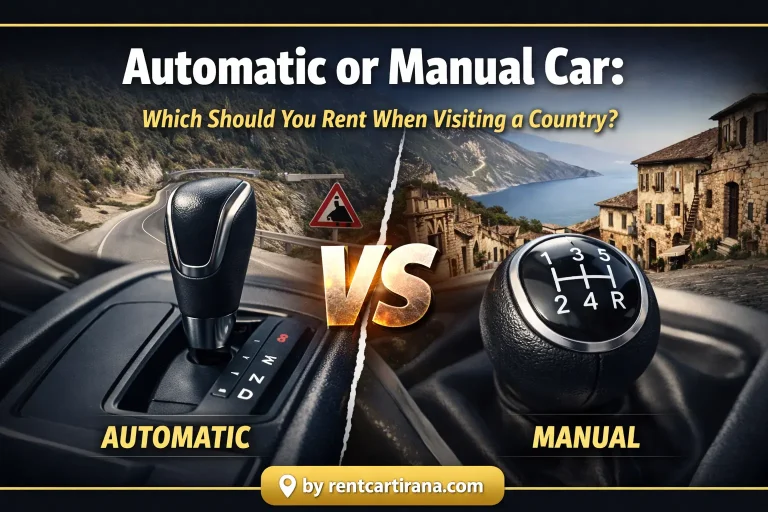
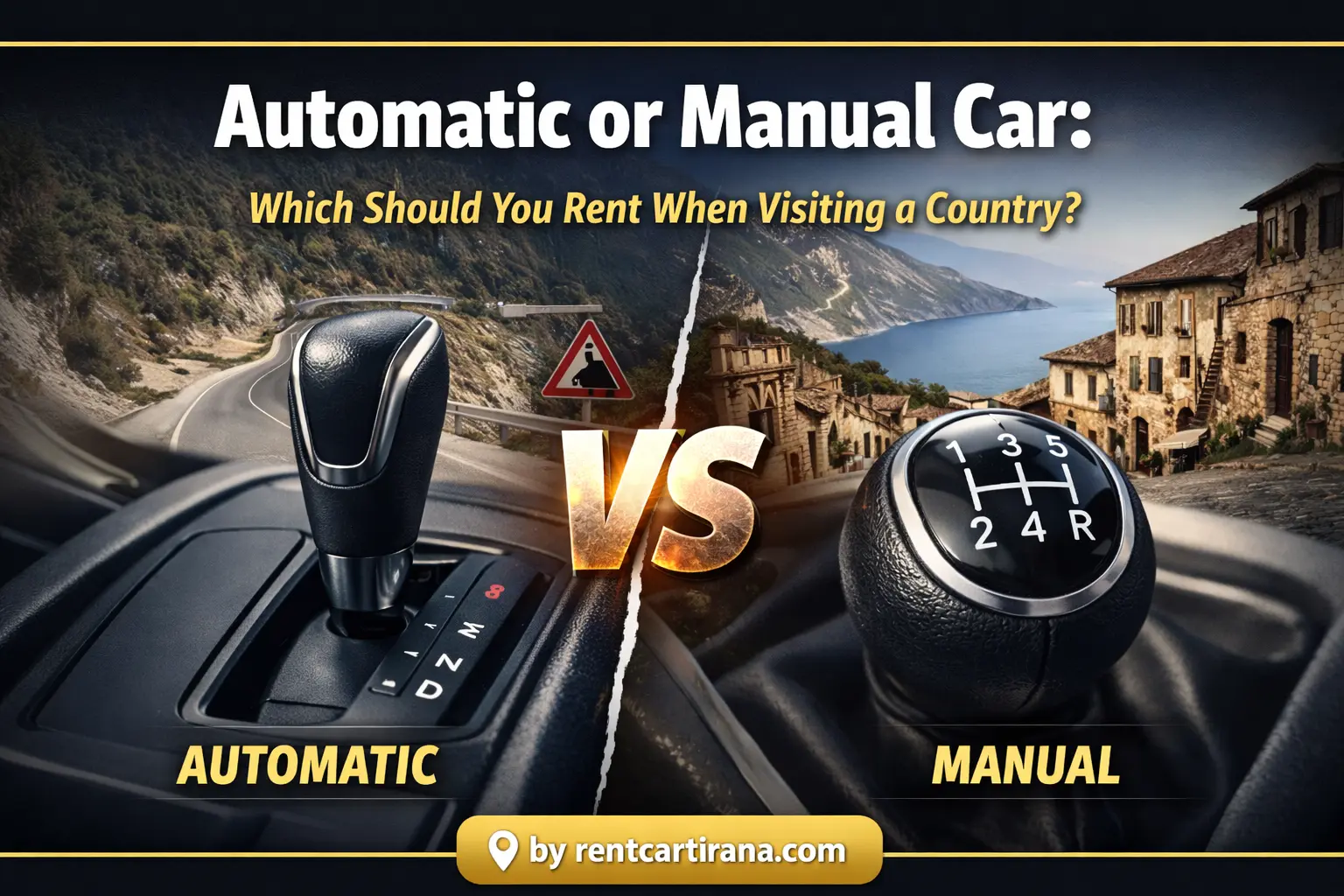
The Direct Answer: If you are visiting a country with mountains, city traffic, narrow roads, or changing road conditions, choose an automatic. Manual only makes sense if you have real experience, strong clutch control, and genuinely enjoy driving. Otherwise, the mental effort is not worth it.
The Real Question Isn’t the Car, It’s the Driver
Many travelers think this decision is about terrain.
In reality, it’s about you.
In countries like Albania (and many others with similar infrastructure), roads are not always predictable. You can drive from a modern highway into a steep mountain pass within minutes. You may encounter livestock, unfinished sections, sudden inclines, cobblestone streets, or heavy city traffic.
A manual car requires constant micro-decisions:
- When to shift
- How much clutch to release
- How to prevent rollback
- When to use engine braking
- How to manage stop-and-go traffic
If you enjoy that engagement, manual can feel satisfying.
If you don’t, it becomes tiring very quickly.
Vacation driving should not feel like a driving test.
The Hidden Cost of “Saving Money”
Most tourists choose manual to save $10–15 per day.
On paper, that looks smart.
But what often happens?
On mountain roads like Llogara Pass, you may deal with:
- Steep inclines
- Frequent hill starts behind slow vehicles
- Tight curves requiring gear control
- Sudden stops
In cities like Tirana, traffic can be constant stop-and-go. That means continuous clutch use.
In historic towns with steep cobblestone streets, smooth clutch release becomes critical.
If you are not fully comfortable, your stress level rises. Your left leg gets tired. Your attention shifts from enjoying the scenery to managing the vehicle.
By the end of the trip, most people realize the savings were small compared to the effort.
Fuel Consumption: What Actually Matters
There is a common belief that manual cars consume much less fuel.
Technically, manuals can be slightly more fuel-efficient. But in real driving conditions, the difference is often minimal.
What impacts fuel consumption more:
- Driving style (aggressive acceleration vs smooth driving)
- Vehicle category (SUV vs compact car)
- 4x4 systems
- Fuel type (petrol, diesel, gas)
A good average consumption range is around 5–6 liters per 100 km for efficient vehicles.
An automatic driven smoothly can consume nearly the same as a manual driven properly. A manual driven aggressively can consume more than an automatic.
The gearbox is not the biggest variable.
Mountain Driving: Where Manual Becomes Technical
Mountain roads are where the difference becomes clear.
If you drive manual in mountainous terrain, you must:
- Master hill starts without rollback
- Control clutch release smoothly
- Use lower gears for downhill engine braking
- Avoid overheating the clutch
- Brake progressively, not suddenly
If you don’t have strong experience, mountain driving in manual adds pressure.
Automatic removes that layer of complexity. You focus on steering, positioning, and awareness — not gear timing.
That mental freedom matters more than people expect.
City Driving: The Fatigue Factor
In heavy traffic, a manual becomes repetitive:
Clutch. First gear. Move. Stop. Clutch again.
Over hours, this becomes physical fatigue. It also reduces attention span.
Automatic eliminates that repetition. In busy cities, that alone is often worth the difference in price.
When Manual Actually Makes Sense
Manual is not wrong.
It works well if:
- You have at least two years of confident manual driving
- You instinctively control clutch and brake coordination
- You don’t panic on steep hills
- You enjoy technical driving
- You feel more connected and in control with gears
For experienced drivers who truly like driving, manual can feel more engaging and enjoyable.
But this is about preference — not savings.
What I Recommend Based on Real Travelers
For nervous first-time visitors:
Automatic, ideally compact or small SUV. Confidence matters more than size.
For couples doing scenic coastal trips:
Automatic preferred. Long drives are more enjoyable without constant shifting.
For mountain routes and remote villages:
Automatic SUV. Power + simplicity + control.
For families with luggage:
Automatic family SUV. Space and comfort reduce travel tension.
Across all categories, automatic reduces mental load.
A Simple 30-Second Decision Test
Before booking, ask yourself:
Do I actually enjoy driving, or do I just want to reach my destination?
Am I fully confident controlling a clutch on steep hills and narrow roads?
Would I feel calm parking this car on a sloped or tight street?
If any answer creates doubt, choose automatic.
Final Recommendation
In countries with varied terrain and unpredictable conditions, automatic is the safer, smarter, and more comfortable option for most travelers.
Manual is for confident drivers who enjoy the process — not for those trying to save a small amount of money.
Key Takeaways
- Automatic is the best overall choice for most tourists.
- Manual savings are usually small compared to the added effort.
- Driving style affects fuel consumption more than gearbox type.
- Mountain roads and city traffic increase manual fatigue.
- Choose based on your confidence level, not just price.